Neonatal G6PD
96-test enzymatic kit
File 01
Padtan Elm was a real company. Kits were sold. A 1999 power of attorney names Farideh Kavesh as his attorney. After that date, his name on company paper is read as her using that instrument — not as proof he was in the room, and not as proof he was paid. He says he received nothing. Even if a 2013 share deed cannot be shown, the claim is that he was excluded from control and proceeds. That question is now before the court in Asbaghi vs Asbaghi.
Founding general meeting
Date line on this photo is blank
1999 power of attorney
Office 198 · full first page, not the tight zoom
Behlouli letter
Farsi original, 14 Jan 2013 as printed in the letter

Directory listing — MD: Narges Javad
Plaque 50, South Sarparast. Phones held off this caption

iranindustry.de — manager Narges Javad
PADTAN ELM CO. / Lab Kit. Independent of Docs6
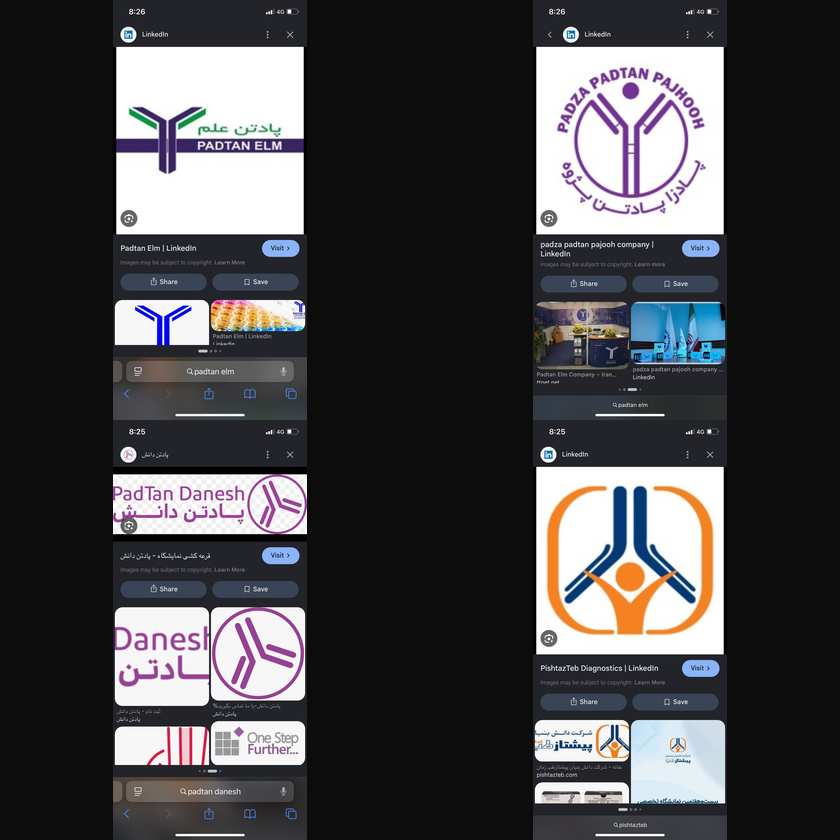
Related-name marks as he presented them
Elm, Padza, Danesh, Pishtaz Teb. Name-family, not a register
Named kits · warehouse inserts
Neonatal G6PD
96-test enzymatic kit
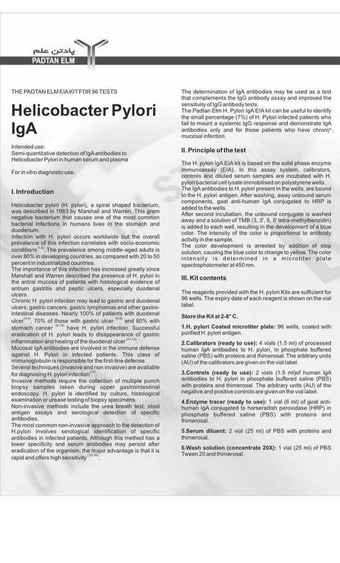
H. pylori IgA
EIA kit under the Padtan Elm mark
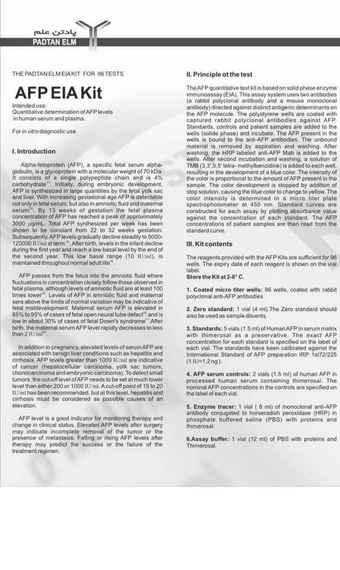
AFP EIA
Quantitative AFP insert
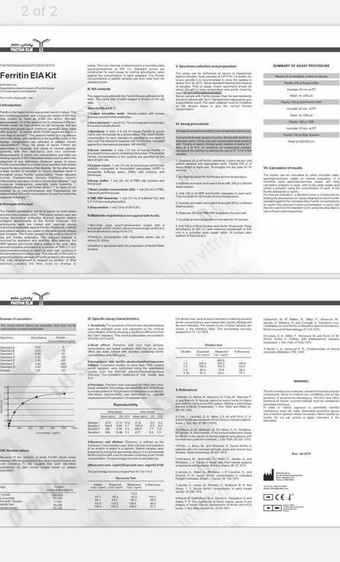
Ferritin EIA
Company mark on the insert
This is the company file. The 1999 power of attorney and the 2013 inspector letter sit in their own sections. Independent reporting on this dispute is linked from the home page; it is coverage, not an exhibit. Roche dollar figures stay off this site until source contract pages exist. Continue in the 1999 power of attorney and the 2013 letter.
After 1999, Hooman’s name on Padtan paper is treated as Farideh using that power of attorney unless a document independently shows his own hand and presence. July 2003 minutes already print his holding “by power of attorney of Farideh.” A 2016 gazette that names him vice-chair, and 2018 and 2022 lists that still print 250 shares, are the same structure. They are not proof he sat in the room. They are not proof he was paid. His claim is that he received nothing from the company. Name-on-paper is not a dividend.
The live theory is exclusion from control and proceeds, not only a missing deed. An attorney-in-fact has a duty to act in the principal’s interest. That is the legal frame of the civil case. It is not a closing that “she stole the company.” The 14 January 2013 share-transfer instrument has not been mounted. If concealment is the theory, the people who would have held that paper would not publish it. Absence of the deed is therefore expected on that theory. It is not, by itself, proof of a conspiracy. What is on paper that day is an official gazette adding “export of all permitted goods” to the company’s objects — same calendar date, different act.
Kianoosh Behlouli’s Farsi letter is the witness document for that week. Rasmio and warehouse minutes put him in the inspector’s seat for 2011–2013, as alternate inspector, with Amargaran Accounting as principal. The letter’s own heading says principal. Keep both. The match of man, office, and years is why the letter is treated as more than anonymous commentary. It is still not a court finding.
He named Narges Javad as a co-founder when the investigator met him. His recall of other events from that period has been good. Keep the claim. The 1996 founding minutes still do not print her — four names, including Mostafa Bagherzadeh. What the warehouse and public record do print: equal shareholder by October 2002; managing director on the May 2012 gazette; manager / MD on public directories, one of them at plaque 50, the founding-board address. That is a principal. It is not a rewrite of Docs6.
The May 2012 recapitalization is the other scale that belongs here. Paper capital moved from 62.5 million rials to 6 billion, paid by conversion of matured claims. Iran ran two dollar rates that year. After 28 January 2012 the Central Bank official rate was 12,260 rials to the dollar. At that official scale the jump is about $5,100 to about $489,000. On the parallel-market year average it is about $2,400 to about $230,000. That is hundreds of thousands of dollars of paper capital, not a documented USD wire, and the gazette does not name who held the claims.
The Palmaz-Schatz calendar is supporting context, not a shipping record. First coronary implant December 1987; international coronary use underway by 1991; U.S. iliac approval 1991; U.S. coronary approval August 1994. That U.S. date does not close an early-1990s introduction in Tehran. Hospital histories date angioplasty expansion there to 1370 SH (March 1991–March 1992). Foreign proctors for new devices were ordinary. None of those pages currently print his name on a crate or an itinerary.
Two years before that 2013 export-clause gazette, the Farci Rasmio dump of the same company — register 127180, national ID 10101705792 — prints a unique gazette the English extract did not table. Extraordinary meeting dated 8/3/90 (~29 May 2011); gazette printed 1391/03/08; news 11777168. Objects as printed: production of laboratory and hospital medical-diagnostic goods; import of primary materials, equipment, and machinery needed for production; research into production of medical diagnostic kits. Kit production and import of production inputs were already on the register. That is not the missing share deed.
The 2013 calendar is kept in that same spirit. On 14 January the gazette adds “export of all permitted goods” to Padtan Elm’s objects. On 23 June, padtanteb.ir has its first listed Wayback save. On 1 July, Executive Order 13645 / IFCA takes effect. Those dates are real. The order is sectoral — energy, shipping, shipbuilding, the rial, the auto sector — and broader U.S. Iran sanctions already existed. It is not a finding that kit exports became newly illegal that morning, and it is not a finding that anyone created a shell to evade. The open question is narrower: an old registered IVD company with a long gazette trail is a harder name for a counterparty to take than a clean new entity. Padtan Teb’s own copy claims 1366, 1369, and 1990. Those years are not the same. A new website is not a new legal entity. The entire warehouse Padtan Teb folder was listed: an introduction still, two kit stills, and a titled report. There is no company-register page with a national ID, a register number, and an official founding date. Website years are not the register. Keep the conflict and move on.
Ghasemi’s own CV independently prints a Scripps Clinic endovascular certificate in 2003 and lists M. Saeed and Paul Teirstein as Scripps references — the same campus and the same names that appear in the claim he was brought to San Diego around 2000/2003. Those lines are printed as a certificate and as references. They are not a 1990s training log, and they are not proof Hooman made the introduction. Folder 3 and a warehouse title search found no boarding pass, Scripps badge, or letter that he arranged that trip. The CV already matches year and campus. The introduction is still the claim. Mohsin Saeed is pinned for later.
The rest of the folder titled Articles Naming Padtan ELM is now walked. A Wiley methods block names Padtan Elm of Tehran on the same chemicals page as SinaClon of Tehran. A colonoscopy paper prints “Padtan elm kit (made in Iran) was used to measure PSA.” A companion education paper measures hemoglobin and ferritin “using Padtan Elm Company (Iran).” The second PDF of the IgE paper is the same 1.88 MB file already on this page — not a second citation. An Elsevier bookstore search for “Alnylam AND Padtan Elm” that returns 45,200 unrelated books is a search hit. It is not a paper.
In November 2018 a Padtan Elm contract still names Farideh Kavesh and Soudabeh Keykavousi as authorized board members to buy 30,000 ELISA plates — Biomat Italy, catalog MGOIF-HB8 — through Parsian Zist Idea. Register 127180 and national ID 10101705792 on that paper match the company already on this site. Euro totals stay off this page. That is hard commercial activity after the alleged 2013 exclusion. It is not the missing deed, and it is not a finding about his hips.
He presented four Google stills — Padtan Elm, Padza Padtan Pajooh, PadTan Danesh, and Pishtaz Teb — as shells of the original company. The stills show related names and similar badge logos. That is on the paper he brought. It is not a register that they are one legal entity, and it is not a finding that anyone created a shell to evade. Pishtaz Teb is already a named defendant on the 2017 Tehran filing. Padza dates itself to 2017; a public CV names Fatemeh Rabbani as its founder. A sibling iranindustry.de page prints Padtan Darou next to Padtan Elm, with Narges as manager of Padtan Elm and Asadizade as manager of Padtan Darou. SuperGrok commentary is not a gazette. The Padtan Teb subfolder still has no national-ID / register-number / official-founding-date page. Website years are not the register.
Iranome is a public genomic catalog. Its FAQ names Illumina sequencers. No page in that file names Padtan Elm, Farideh, or Hooman. A documented ELISA-kit company in the same country is capability. It is not ownership of that catalog. A Thermo Fisher search for “Padtan Elm” hits a baker’s-yeast gene called Elm1 — a string collision, not a contract. An Academia.edu title using both names existed long enough to be captured. It is not his paper. It was found by the investigator and later disappeared. Keep the anomaly.
Founding general-meeting minutes. Date and hour lines on this photo are blank. CamScanner footer cropped. Four signatures at the foot.
Four partners × 25%: Mostafa Bagherzadeh, Alireza Amiri Gharagozlou, Farideh Kavesh, Hooman. Capital 50 million rials. Narges is not on this founding page. Companion warehouse pages: first board minutes (Docs3) name Alireza chair and Farideh managing director at plaque 50, date and hour blank; constitution last page (Docs14) is dated 1375/6/18 and signed by the same four. Official register date on Rasmio is 1375/10/17.
Establishes. The company was formed on paper with those four names. LinkedIn’s 1995 line is marketing copy. The constitution date on the scan is 8 September 1996.
Does not establish. Does not prove later share movements, a 2013 transfer, or that memos listing Narges as a 1995 founder are correct. Originals beat memos.
Facts
Source: Folder 3 / 1. Padtan Elm Related Docs / Padtan Elm Docs6.jpeg
Cropped from the warehouse still. Safari chrome removed. The insert prints پادتن علم / PADTAN ELM.
Kit insert for a 96-test Neonatal G6PD enzymatic assay. Intended use, kit contents, and storage at 2–8 °C are printed under the Padtan Elm mark.
Establishes. Padtan Elm sold named diagnostic kits under its own mark.
Does not establish. A product insert does not prove a 2013 share taking, a Roche contract, or a closed loop from his hips.
Facts
Source: Folder 3 / 2. The Padtan Elm Kits / Padtan ELM Neonatal G6PD.1.jpeg
Cropped from the warehouse Wayback still. WhatsApp chrome and archive.org footer removed. The insert prints پادتن علم / PADTAN ELM.
EIA kit for semi-quantitative IgA antibodies to H. pylori in serum and plasma. 96 tests. Store at 2–8 °C. Coated wells, calibrators, and HRP conjugate are listed under the company mark.
Establishes. A second named Padtan Elm diagnostic kit exists on an archived insert.
Does not establish. Does not prove a 2013 share taking, a Roche contract, or that his own labs were run on this kit.
Facts
Source: Folder 3 / 2. The Padtan Elm Kits / Padtan ELM Helicobacter Pylori IgA.1.jpeg
Cropped from the warehouse Wayback still. Phone chrome and archive.org footer removed.
Quantitative AFP EIA for serum and plasma. Intended use and two-antibody sandwich method printed under the Padtan Elm mark. 96 wells.
Establishes. AFP was among the named kits sold under the Padtan Elm mark.
Does not establish. A tumor-marker insert does not prove a closed loop into his chart.
Facts
Source: Folder 3 / 2. The Padtan Elm Kits / Padtan ELM AFP EIA Kit.1.jpeg
Page 2 of 2 of the warehouse still. Company mark repeats at the head of the page.
Ferritin EIA procedure, calculation, and references under the Padtan Elm mark.
Establishes. Ferritin was among the named kits.
Does not establish. Does not prove his iron studies were processed on this kit.
Facts
Source: Folder 3 / 2. The Padtan Elm Kits / Padtan ELM Ferritin EIA Kit .jpeg
Medical-directory still. Phone and fax numbers on the listing are held off this caption. Companion still: iranindustry.de, PADTAN ELM CO., Lab Kit, manager Narges Javad.
He told the investigator she was a co-founder. The 1996 founding minutes still do not print her. What these stills add is independent public listing: a medical directory names PADTAN ELM CO, head office NO.50 South Sarparast St., West Taleqani, Palestine Sq, Tehran — plaque 50, the same founding-board address — MD: Narges Javad, activity Laboratory Kits, marked manufacturer. iranindustry.de prints the same company as Lab Kit, manager Narges Javad. A sibling still (IMG_3575) of the same directory page also prints PADTAN DAROU CO, Pharmaceuticals, manager Asadizade, on the next line. Together with the October 2002 equal 12.5 million-rial share and the May 2012 gazette naming her managing director, she is documented as a principal of Padtan Elm. That is not the same as being one of the four names on Docs6.
Establishes. Public business directories listed her as manager and managing director of Padtan Elm. That is independent of his recall, and it is independent of the 1996 founding page.
Does not establish. Does not rewrite Docs6. It does not prove she was a 1995 or 1996 founder, and it does not prove she received a 2013 transfer. The same iranindustry page prints a different manager for Padtan Darou. Phone and fax on the directory still are held off this page.
Source: Investigator upload / Narges public-manager stills / IMG_3594.PNG + IMG_4920 2.jpg
Contact sheet of four phone stills added to the shell folder on 14 Sep 2026. Top left: Padtan Elm / پادتن علم. Top right: Padza Padtan Pajooh / پادتن پژوه. Bottom left: PadTan Danesh / پادتن دانش. Bottom right: Pishtaz Teb / پیشتاز طب. Folder title is his label.
He presented these as shells of the original company. What the stills print: four public marks in the same industry, sharing پادتن (Padtan) or طب (Teb) in the name, with similar badge-style logos on the Google/LinkedIn crops. Pishtaz Teb is independently named as a defendant on the 2017 Tehran dispute-council cover already on this site. Padza dates itself to 2017. PadTan Danesh is a third Padtan-family mark on this crop.
Establishes. Those four public names and logos exist, and he presented them together as a related-name family. Name and logo similarity is on the stills.
Does not establish. Does not prove they are one legal entity, that one owns the others, or that anyone created a shell to evade. A Google image search is not a company register. SuperGrok commentary is not a gazette. Live padtanteb.ir still has no national-ID / register-number page in this folder.
Facts
Source: Folder 3 / 4. Padtan Elm Web of Shell Companies / WhatsApp Image 2026-07-09 at 14.59.54–55